Love stinks: Corpse flower blooming at the SFSU Greenhouse
Love stinks: Corpse flower blooming at the SFSU Greenhouse
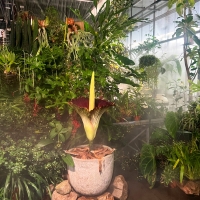
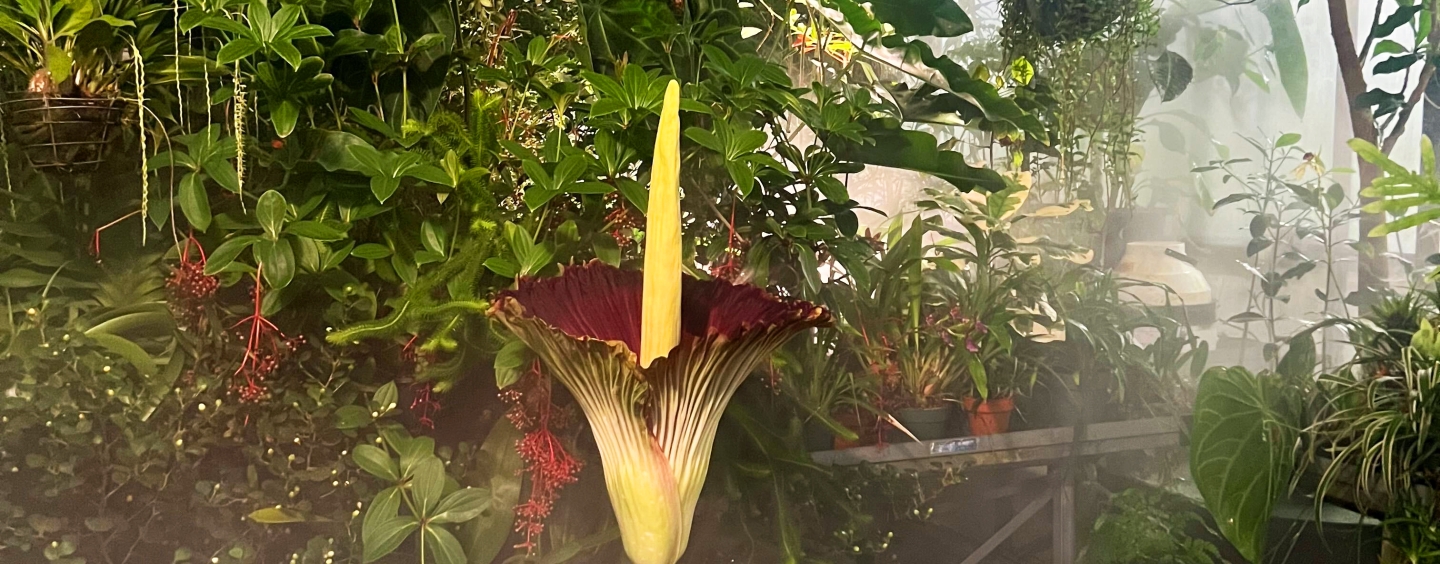
The SFSU Greenhouse’s corpse flower (Amorphophallus titanum) recently bloomed, drawing visitors eager to see — and smell — one of the rarest events in the plant world.
Native to the rainforests of Sumatra, the corpse flower produces the largest unbranched flowering structure on Earth, often growing 6 to 10 feet tall. What looks like a single giant flower is actually many small flowers packed tightly at the base of a tall central spike (the spadix), surrounded by a deep burgundy leaf-like structure called a spathe.
At peak bloom, the plant releases a strong odor similar to rotting flesh. In the wild, that smell attracts beetles and flies that normally feed and lay eggs on carrion. The central spike also warms up during bloom, which helps carry the scent through the forest understory. The entire display lasts only 24 to 48 hours.
Between blooms, the plant spends years building up energy in a massive underground corm. When it’s not flowering, it produces a single large leaf that can resemble a small tree. A bloom like this represents a huge investment of stored energy — which is why it doesn’t happen often.
While the corpse flower draws crowds because of its size and smell, it also tells a bigger story. In its native habitat, rainforest loss and land-use change threaten many plant species, including Amorphophallus titanum.
Living collections at universities and botanical institutions help preserve plant diversity, support research, and give students hands-on experience working with rare species. Such blooms create a rare opportunity to connect people directly with the importance of plant conservation.
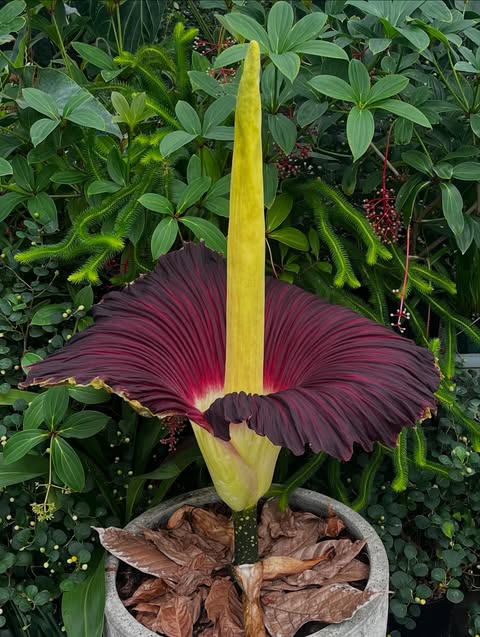
The SFSU Greenhouse’s corpse flower (Amorphophallus titanum) at peak bloom on the evening of February 13, 2026.
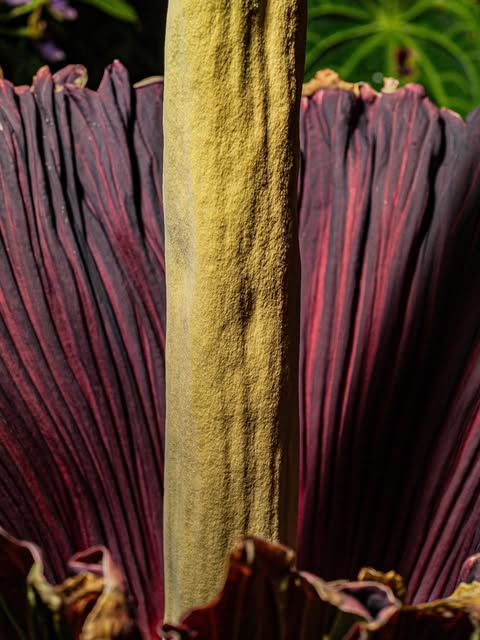
The central spadix produces heat and releases compounds that attract carrion pollinators in the wild.
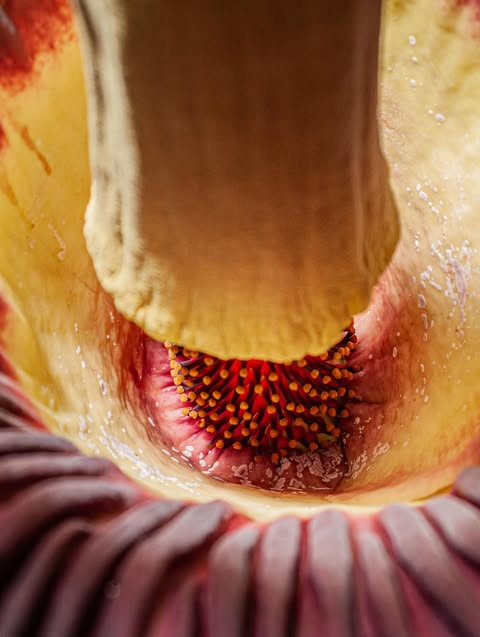
Tiny male and female flowers cluster at the base of the spadix, hidden from view and timed carefully to promote cross-pollination.
Inside the SFSU Greenhouse
Located just north of Hensill Hall, the SFSU Greenhouse is a modern, computer-controlled facility made up of twelve independently controlled rooms. These spaces allow faculty and students to grow plants under different climate conditions — from humid tropical environments to dry desert systems. The facility supports courses, student research projects, faculty experiments, and community engagement throughout the year. This rare horticultural success is a testament to the dedicated stewardship of Greenhouse Coordinator Elliot Levin. His expert care of the living collection ensures that sensitive species like the corpse flower thrive, providing a unique resource for the entire SFSU community.
The greenhouse includes three primary collections rooms:
- A Cool Humid Room with tropical and subtropical species
- A Warm Humid Room with equatorial plants
- An Arid Room featuring cacti and other drought-adapted species
The greenhouse maintains hundreds of plant species, including rare and endangered plants from California and around the world, and serves as both a teaching space and research hub supporting undergraduate and graduate education.
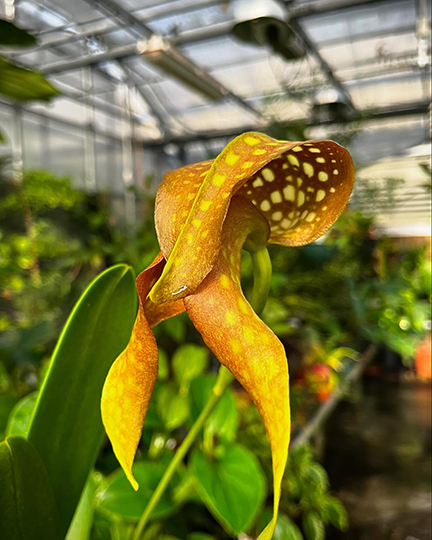
Research, Teaching, and Training
The greenhouse supports studies in pollination biology, plant–animal interactions, development and morphology, ecophysiology, and global change. Faculty research connects greenhouse experimentation with fieldwork and collections in the Harry D. Thiers Herbarium, expanding opportunities for student training across plant and fungal biodiversity.
Students work directly with living specimens, design experiments, collect physiological data, and develop skills essential for careers in research, conservation, and environmental science.
This bloom offered a vivid example of how living collections bridge public engagement and scientific inquiry. While the corpse flower captures attention with its scale and scent, it also reflects the greenhouse’s broader mission: to cultivate, teach, and share knowledge of living plant diversity.
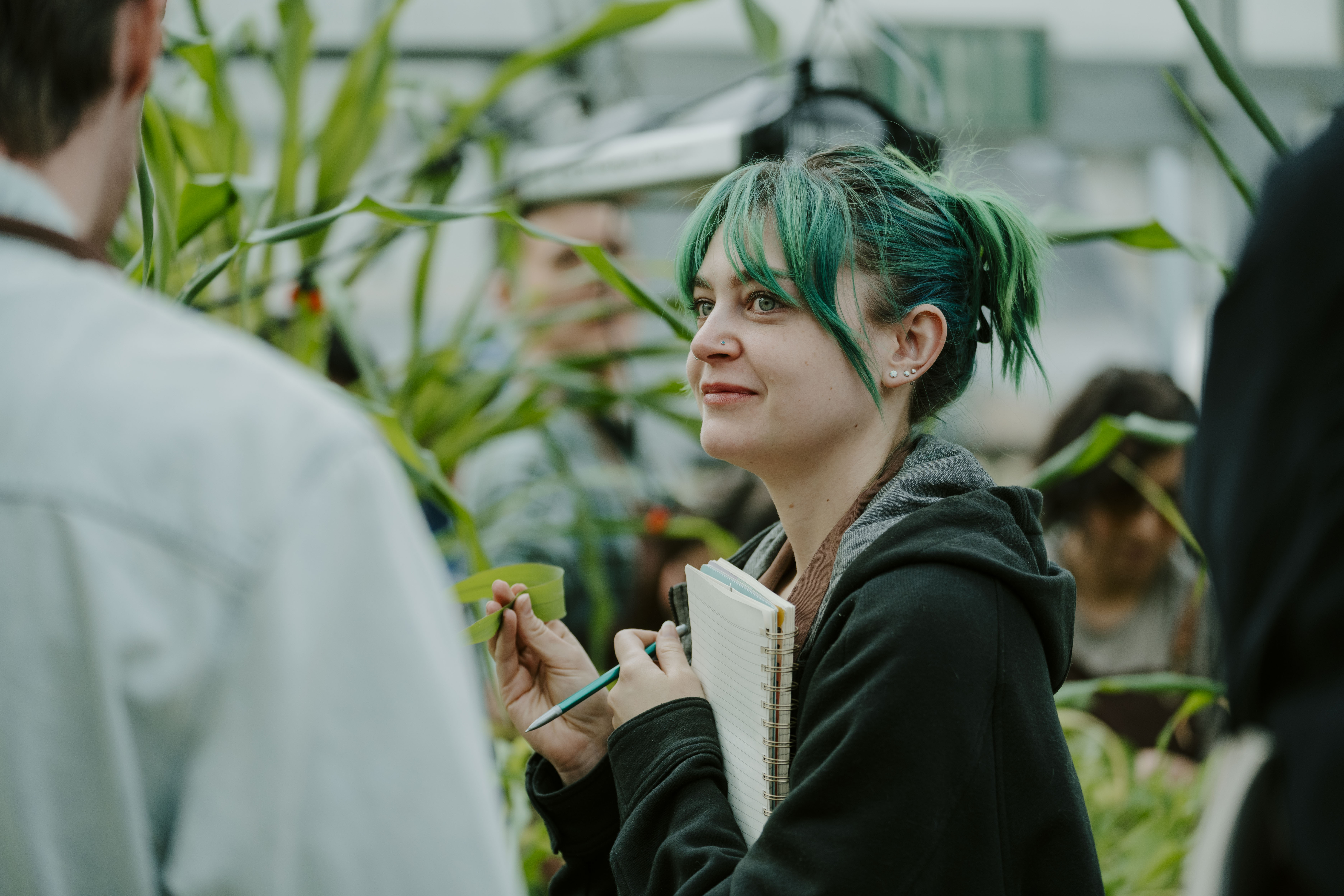
Undergraduate and graduate students gain hands-on experience in plant science, ecology, and experimental design within the greenhouse’s controlled environments.
A Community Moment
Throughout the bloom, nearly 500 visitors, including students, staff, families, alumni, and community members gathered to experience the rare event. Many shared photos and reactions online, expanding awareness of plant diversity and conservation beyond campus. Visitors can follow and tag @friends_of_sfsu_greenhouse and @sfstatebio for live updates, behind-the-scenes content, and future greenhouse events.
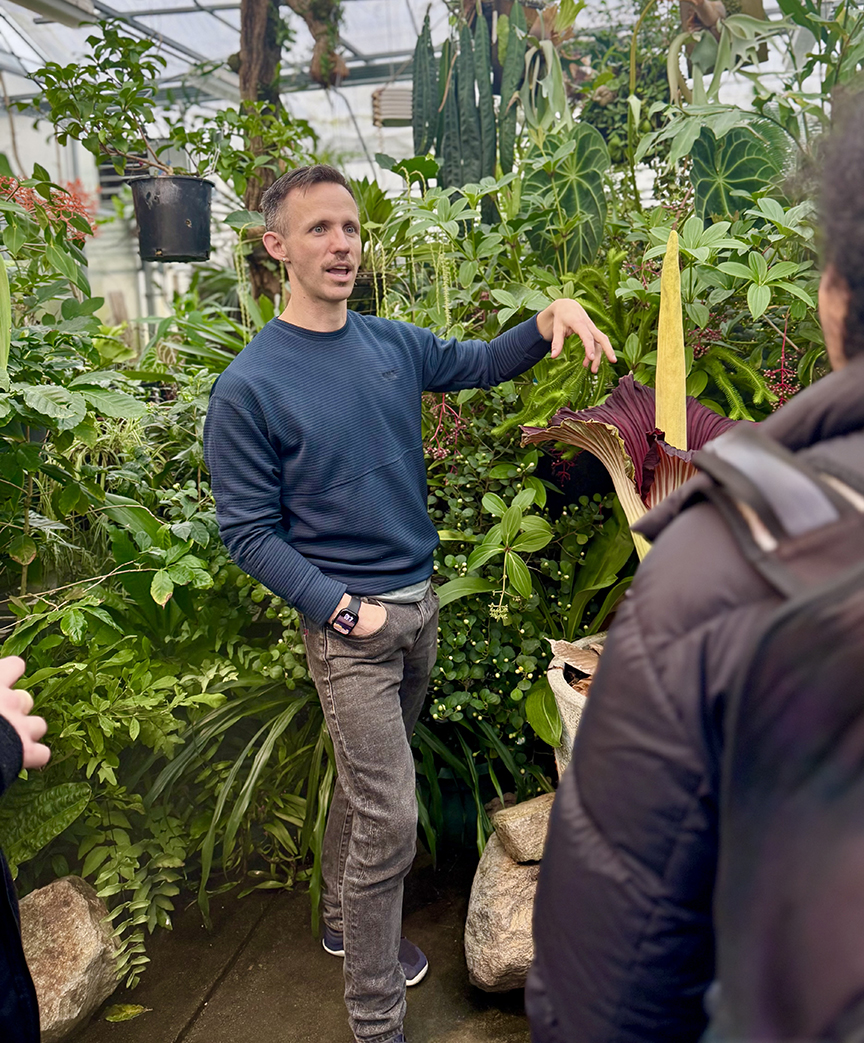
Associate Professor of Biology Dr. Jason Cantley explains the strange biology of the odorous plant.
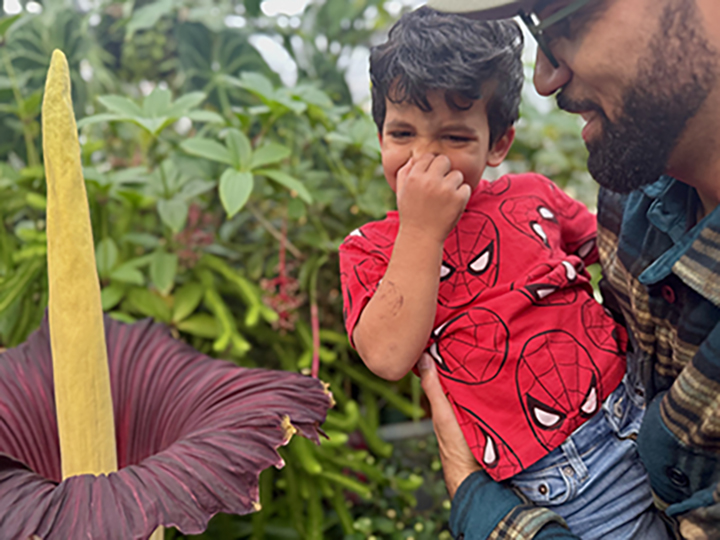
It was stinky, as promised—at least some visitors thought so.
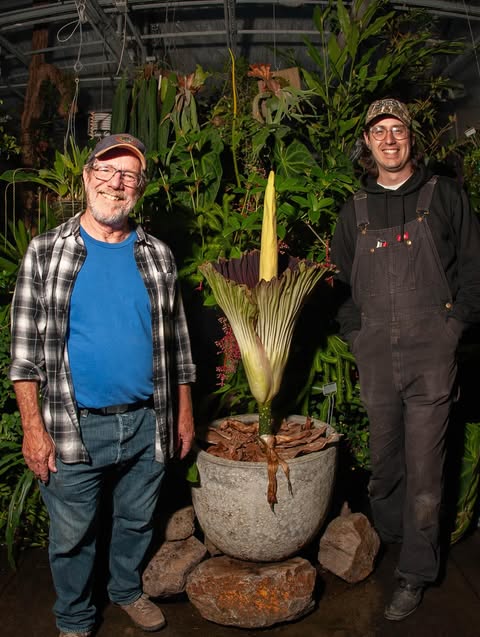
This event—and this bloom—would not have been possible without our team, including dedicated volunteers such as J.R. (left) and our Greenhouse Coordinator, Elliot (right).
The bloom lasted only a few days, but the work behind it continues year-round. From conservation and research to student training and public outreach, the SFSU Greenhouse remains a living center for plant science on campus.
Tags
Related News